
Teamwork Collection
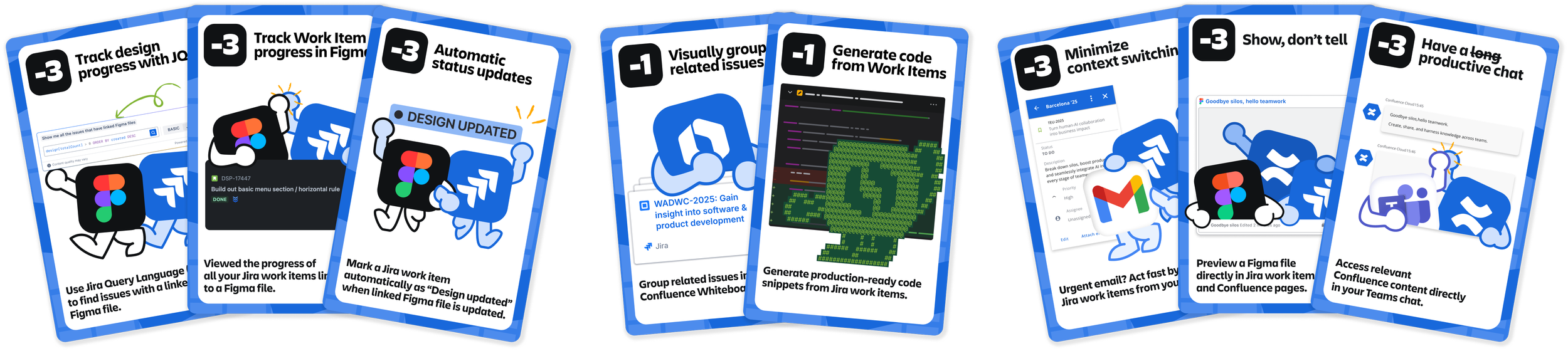
When Atlassian announced the Atlassian Teamwork Collection in 2024, I was tasked with educating our event attendees on a list of features from 4 different products all at once.
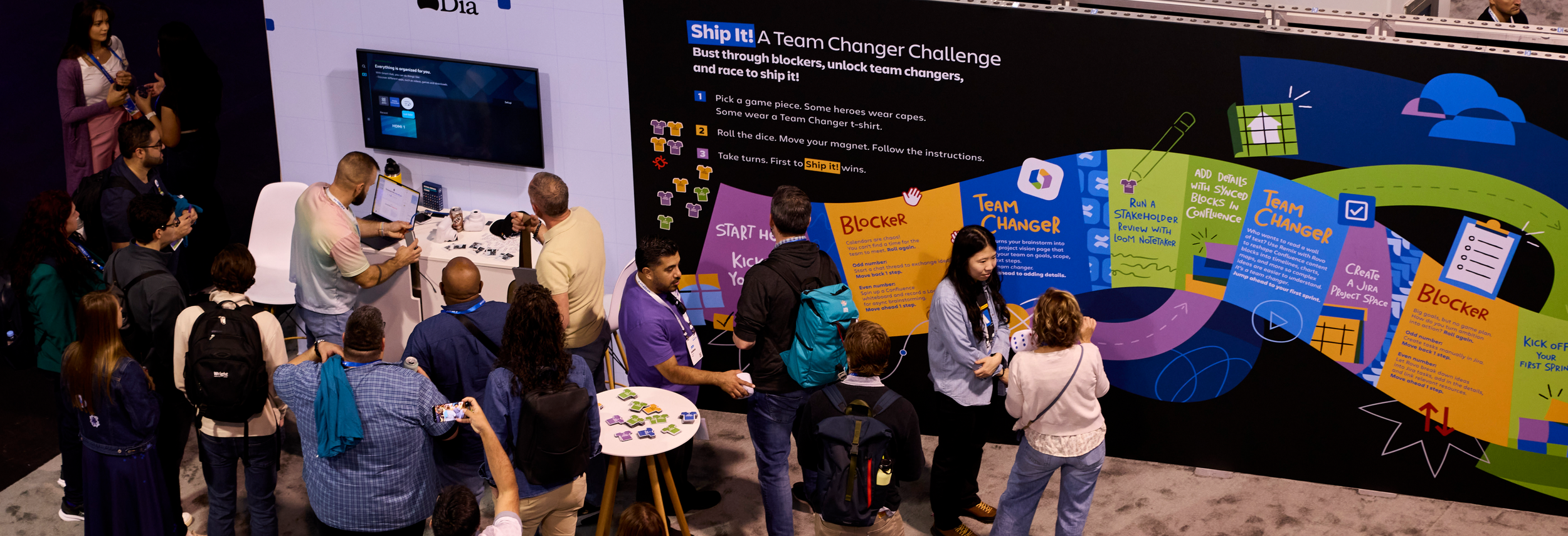
I decided to design a multiplayer card game that was fun, engaging, and can get a little competitive. I’ve had the opportunity to revisit the game and evolve it over the years, with a recent iteration of it being a giant board game that was the most participated activation at Team ‘26 in Anaheim.
🧩 Up to 40 product features presented
that organically reveal themselves to each round of the game with up to 4 players.
🎲 7 iterations on the game
since the launch of Atlassian’s Teamwork Collection. Featured at Atlassian’s flagship events, to industry events all over the world.
🎮 42% of attendees participated
in the Teamwork Collection’s board game activation at Team ‘26 in Anaheim, making it the most successful activation of the event.
Humble beginnings
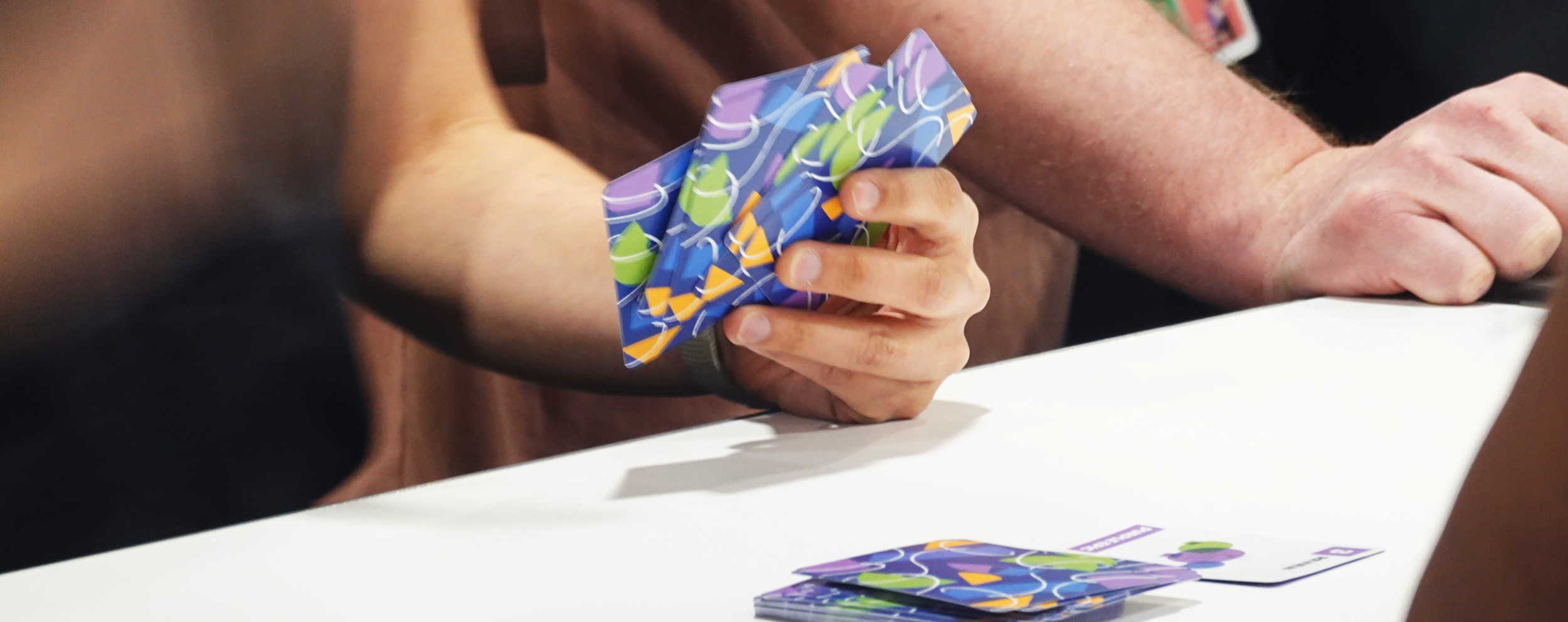
The first game We’ve got issues found its first home when I had the opportunity to design an activation for Teamwork Lab at Team '24 in Las Vegas. The game mimicked working in sprints: 4 epics across a deck of 46 cards, with incident cards that could build or hinder a team's momentum. Players made decisions about when to share information, whether to start or stop a project, how to balance work already in progress. It paralleled the real experience of collaborating on a team, but wrapped in something genuinely fun.
The game cost $638 to produce, and contributed to 966 recorded interactions at Teamwork Lab. Fans returned daily to top the leaderboard. Some attendees got so familiar with the rules that they started teaching other players in their own languages. One customer even asked to place an order for 200 decks.
That experience proved something fundamental to me: you don't need a massive production budget to create engagement that resonates. You need an idea grounded in how people actually experience work, wrapped in something delightful. The game was also designed to be adaptable and was adapted for Team ‘24 Europe in Barcelona. The incident cards could be swapped to reflect different themes, which meant the format could travel to new contexts without starting from scratch.
Role
Creative direction
Project management
Research & development
Content strategy
Game design
UX design
Why design a game
With the long list of product features and integrations we wanted to communicate, a quick and digestible way to engage the attendees would be the most effective way to spark their interest.
Through game we were able to surface up to 40 features per game (based on 1 round of game play with 4 players all drawing feature cards). Whether the attendee was more interested in playing a game or learning about the products, the game allowed them to voluntarily engage with Atlassian staff members who could further speak to their needs.
Gamification has been proven in studies to be a fun and effective tool to increase engagement and stimulate message retention, it also taps into our competitive nature and encourages individuals to compete with one another.
Take Your Time Back @ Config 2025
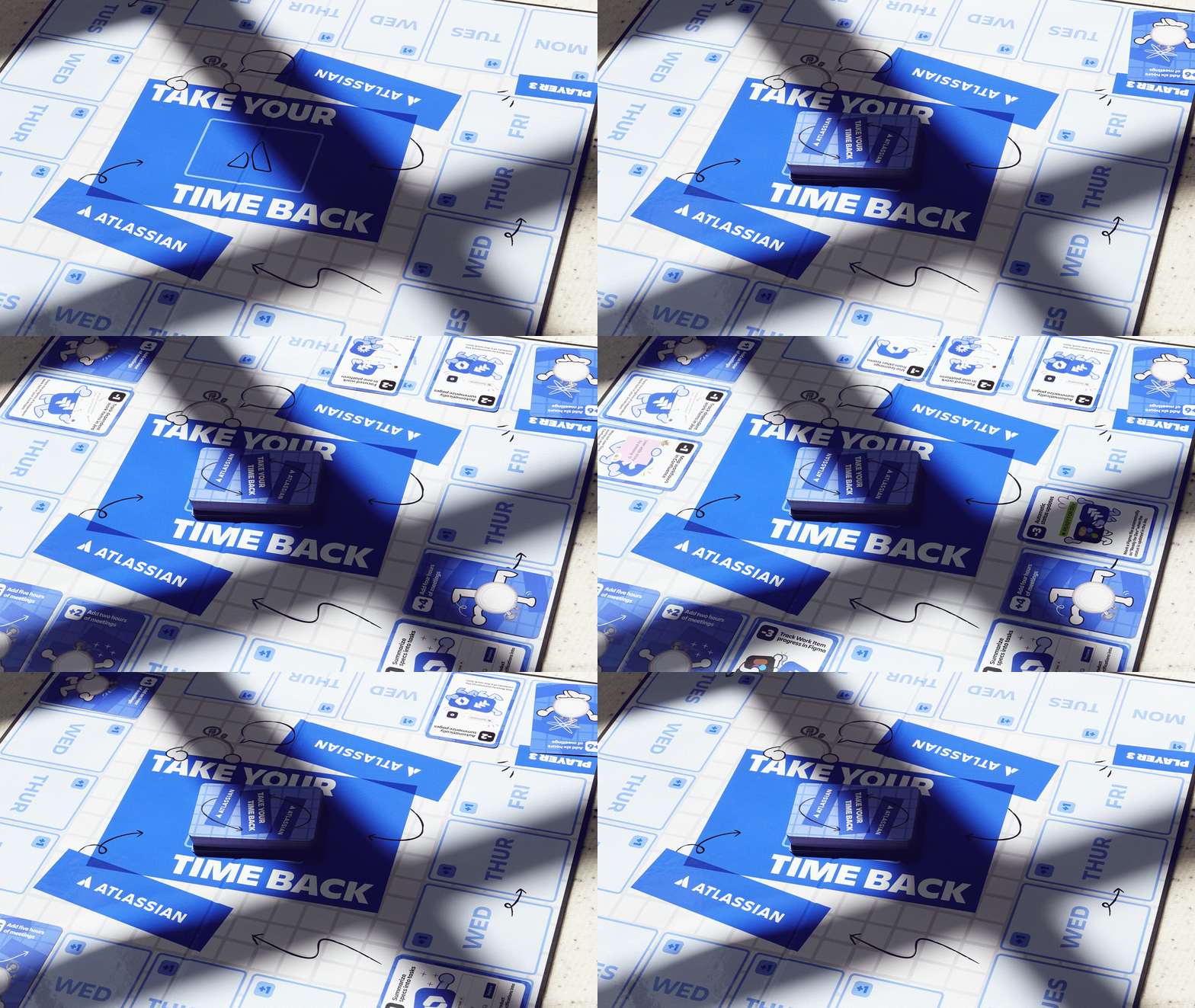
With that proof of concept in hand, the next opportunity came quickly. Take Your Time Back was a card game I co-designed with Jade Jiang for Config 2025 in San Francisco, featuring then newly announced Teamwork Collection.
Jade brought deep product knowledge of Atlassian's Figma integrations, and I brought the game design framework proven at Team '24. Together we built something that could surface up to 40 product features in a single round of play, all while attendees were having fun competing with each other.
The game debuted at Config 2025, and it worked. Attendees voluntarily engaged with Atlassian booth staff because they were drawn in by the game first. Once they were playing, conversations about product features happened naturally, not because someone pitched them, but because the features were baked into the gameplay.
550 leads captured
exceeding our goal of 350, and the 164 from Config 2024.
68% click thru
on attendees learning more about the Teamwork Collection from the card game up to a week after Config 2025.
Adapting for New Audiences
With the success at Config 2025, the card game was adapted for WeAreDevelopers 2025 in Berlin, reframed for a developer audience with use cases and scenarios relevant to their workflows. Then it was revisited again for Team Europe '25 in Barcelona, this time with additional Product Marketing support and a rebuilt version that expanded how the game communicated product value.
Each adaptation required rethinking what resonated with a specific audience, while keeping the core mechanic intact: play a game, encounter real product features, and have organic conversations with booth staff about how those features solve real problems.
Team Changer Challenge @ Team ‘ 26
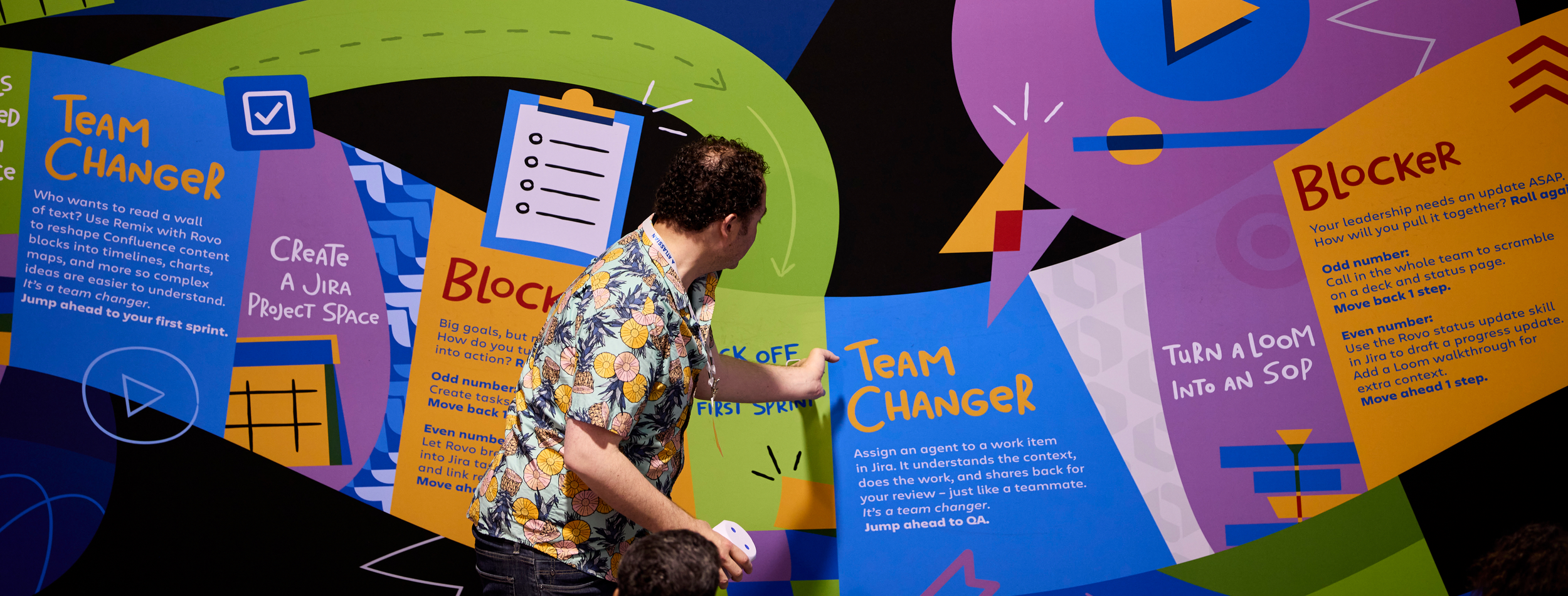
For Team '26 in Anaheim, the game evolved into a wall-based board game. Inspired by Chutes & Ladders, the Team Changer Challenge walked players through the product development lifecycle. Each tile highlighting product solutions showing how Jira, Confluence, Loom, and Rovo work together; the Rovo tiles showcased human + AI collaboration and gave players bonuses within the game.
583 interactions
engaging 42% of the attendees at Team ‘26, and the most attended activation at the event.
10x engagement
over the previous Teamwork Collection activation at Team ‘25.
Returning to Config in 2026
A year after Take Your Time Back debuted, I returned to Config with a board game. For Config 2026 in San Francisco, Autumn Coyle, Halina Mader, Pierce Wolcott, and I adapted the Team '26 board game for Figma's design audience. With roughly 70% designers in attendance, we reframed every use case to be relevant to how designers work alongside product managers, developers, and marketers.
But the real addition was a companion app, intentionally built and vibe coded entirely in Figma Make. We were at Figma's conference, and it was the best tool at our disposal for rapidly building a functional mobile application. The app featured two components: a dice roller (with one traditional number die and one featuring Teamwork Collection apps) and a deck of incident cards that introduced positive, neutral, or negative events into the game.
Building the companion app in Figma Make meant we were using the very platform our audience uses daily, while demonstrating that design tools can ship functional products. It was a meta-narrative that resonated with Config attendees.
922 leads captured
exceeding our goal of 600, and the 550 from Config 2025.
82 independent interactions
captured in the companion application, not including teams that played while sharing a mobile device.
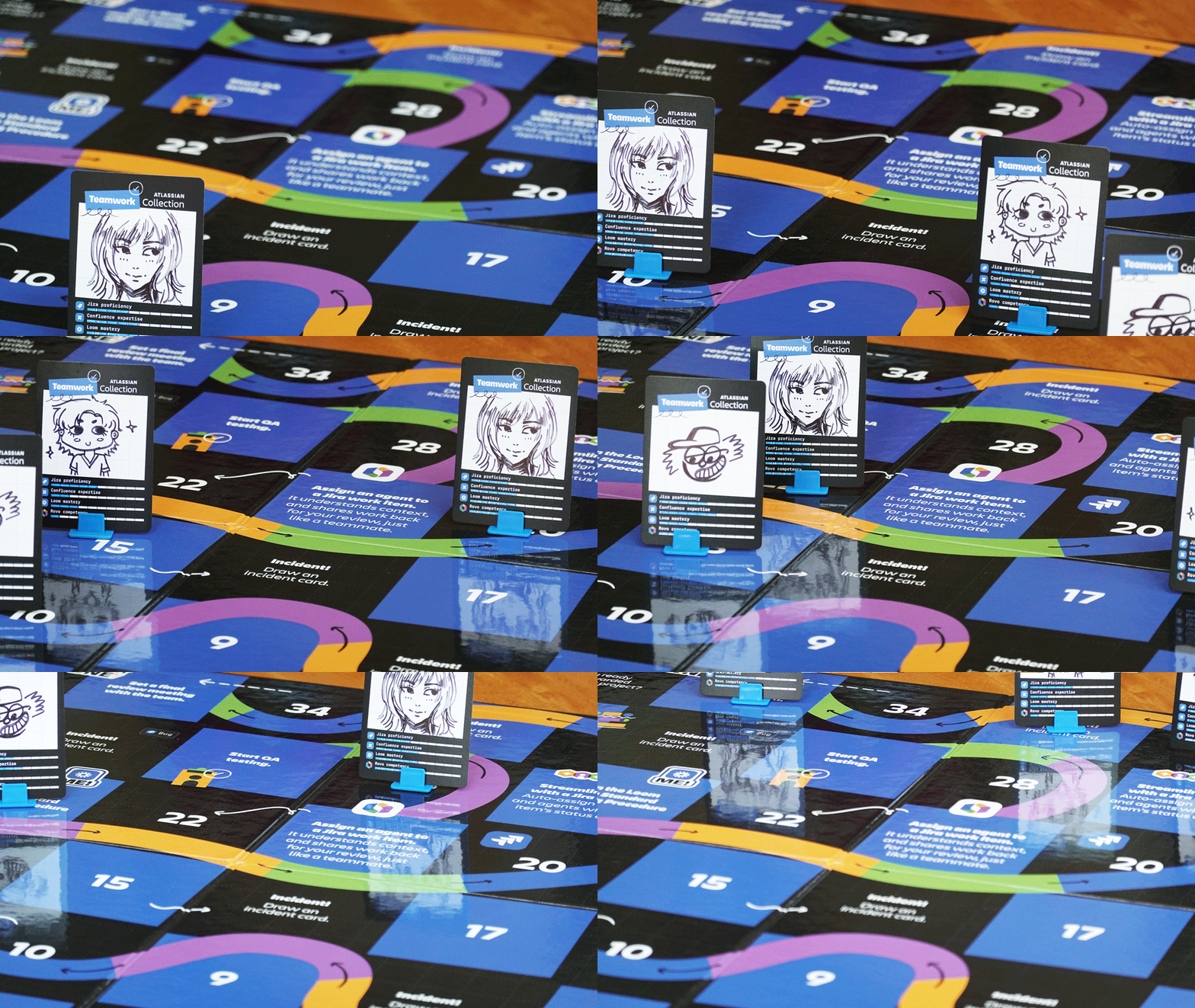
The dice app allows the player to roll a pair of dice. A traditional numbered dice, and the other featuring the apps within the Teamwork Collection.
The incident card app comes into play with a player lands on an Incident tile. The player gets to draw from a deck of positive, neutral, and negative incidents.