Project Boomerang
I was tired of seeing the waste generated at the events I work on and attend, so I self initiated a side project to up-cycle booth fabrics from Atlassian’s events and transform them into purposeful merch with a second life post event.
The project is now an officially recognized sustainability program within the company, a tracked metric at all events, and a contributor to Atlassian’s commitment to sustainability.
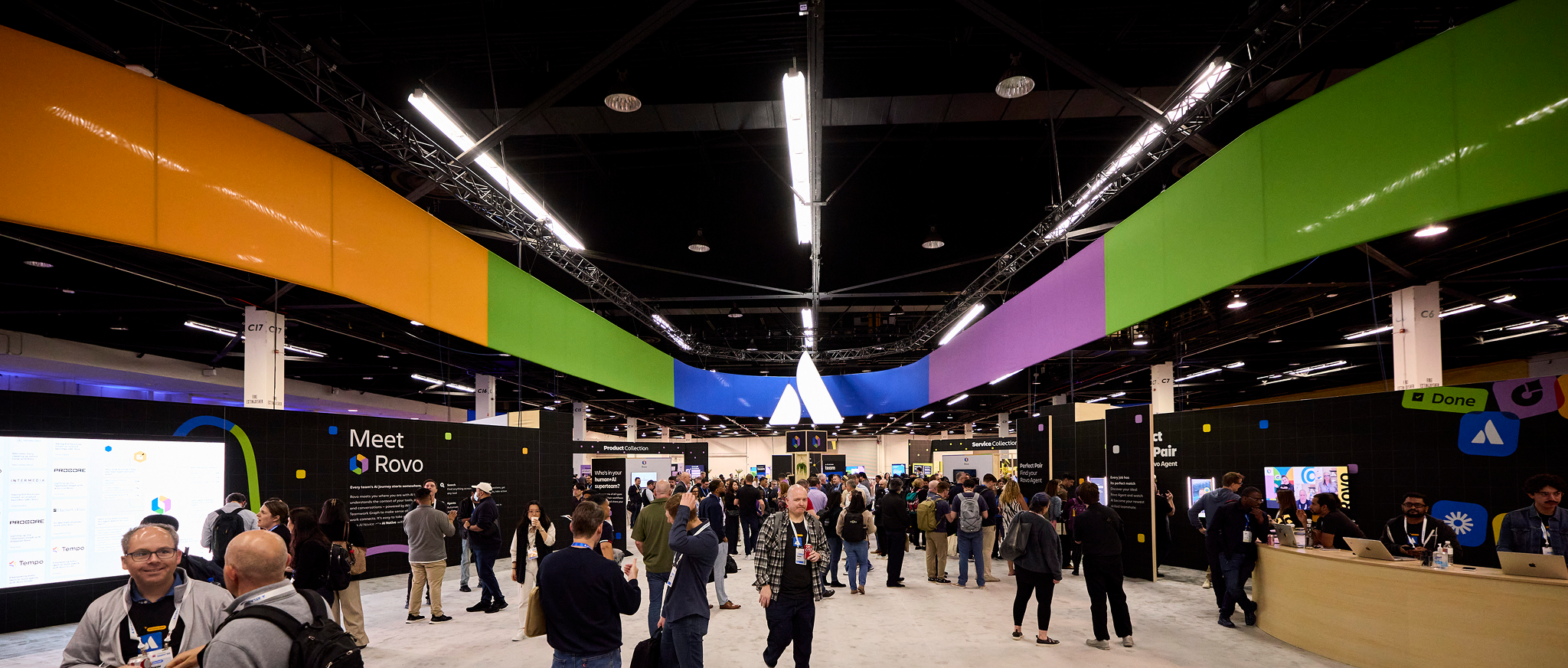
♻️ 95,640 sq in of booth fabric salvaged
from Team ‘26 in Anaheim for future events.
From side project to sustainability program
Every time I work on or attend an event, I’m left wondering what happens to the massive printed fabric panels after the show is over.
The answer, as I learned, was that most of it goes to waste. At Atlassian, we host and participate in over a hundred events a year, many with large-format custom installations and thousands of square feet of high-quality printed material heading to landfill after just a few days of use.
I couldn't let that stand, so I started what would become a four-year journey to prove that these materials could have a purposeful second life. No approved budget. No formal project. I just wanted to influence change, and was willing to figure it out.
Role
Creative direction
Project management
Research & development
Vendor management
The idea that wouldn't die
“Project Boomerang” (coined by Robert Shabazz ) is a cheeky nod to Atlassian's Australian roots, and was a project that started as a Ship It project in 2022. My pitch was straightforward: take decommissioned booth fabrics and turn them into tote bags that event attendees could actually use.
The idea was well-received, but loving the idea and funding a concept are different things. Without a proof of concept or tangible evidence that this could work at scale and that attendees would actually want them, stakeholders weren't ready to commit. So the project went back on the shelf… but it never left my mind.
I brought it back during another Ship It in 2023, this time prototyping small pouches from test prints. Progress was made, but it still wasn’t enough to cross the finish line. I revisited it again during a Brand team hackathon “Future Brand Week,” where my team and I fleshed out vendor research and production plans even more. Each time, I moved the needle forward a little more.
The project had no official home, no dedicated budget, and no mandate from leadership. But I kept returning to it because the problem hadn't gone away and neither had my belief in the potential solution.
Process
I used test print fabrics from past events to make prototypes of potential items that can be gifted or sold at future events.
I also explored various avenues for the items to be distributed: as gifts for smaller events, allowing attendees to connected to the main flagship events. Another idea I was exploring was to work with the employee onboarding team, using the booth fabric to produce onboarding gifts.
Taking matters into my own hands
Here's the thing about grassroots innovation at a large company: nobody is going to hand me permission. I had to earn it through evidence, so I decided to build that evidence myself.
After Atlassian's Team '25, I salvaged fabric from a stunning illustrated booth panel by Sari Jack and Lauren Parker , the visuals were just too striking to throw away. Then I recruited colleagues from Atlassian's internal fiber arts community. I put out the call for hobbyist sewers who might want to help, and rallied volunteers who were willing to spend their own time stitching prototypes.
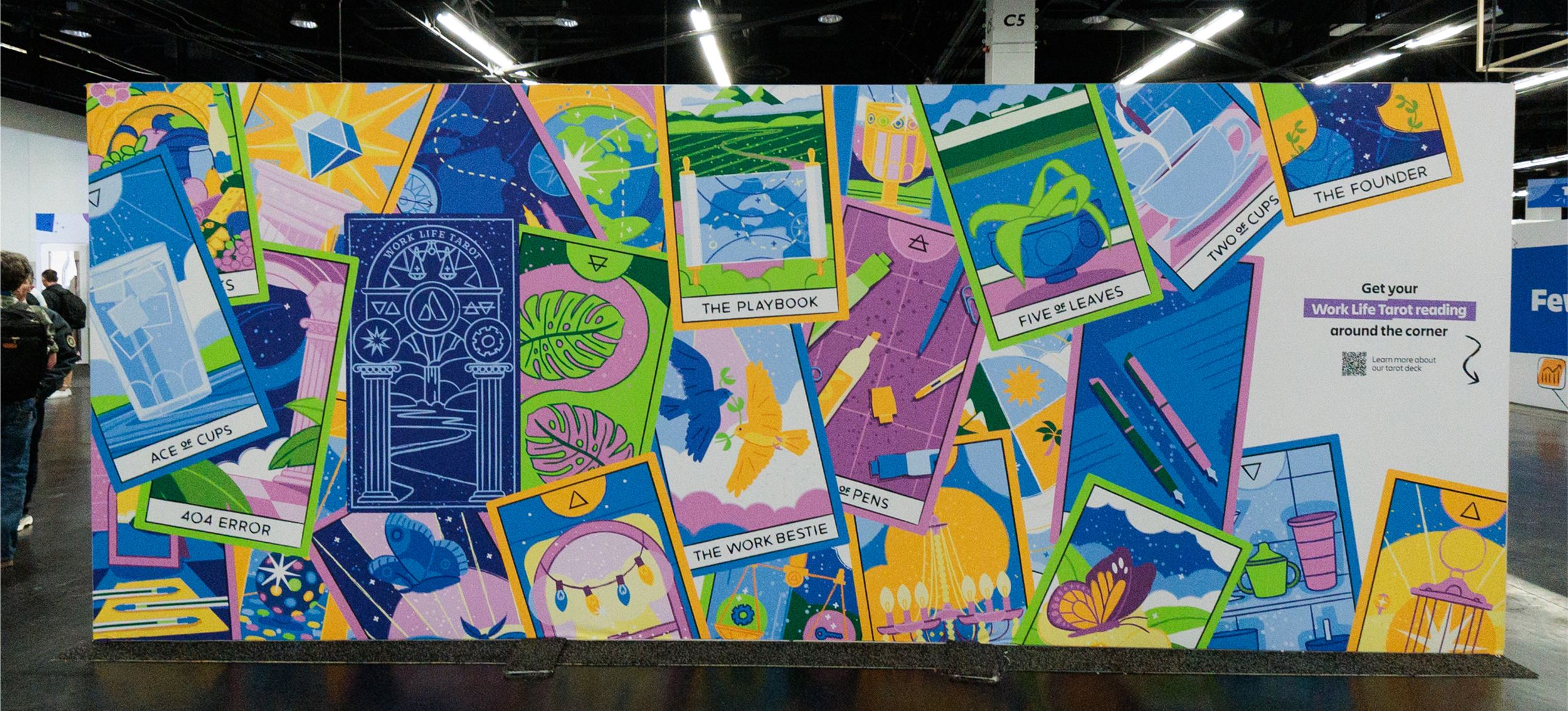
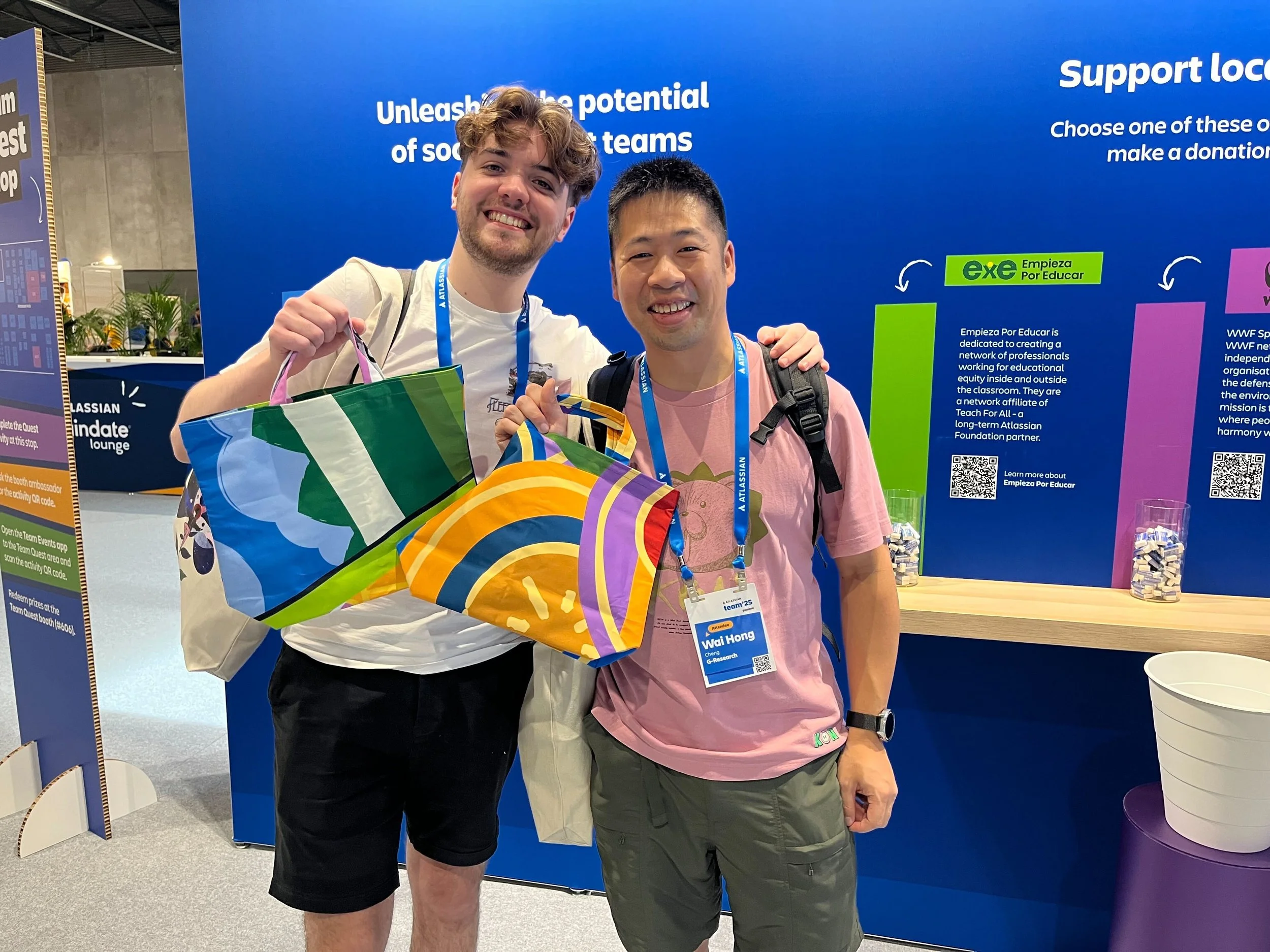
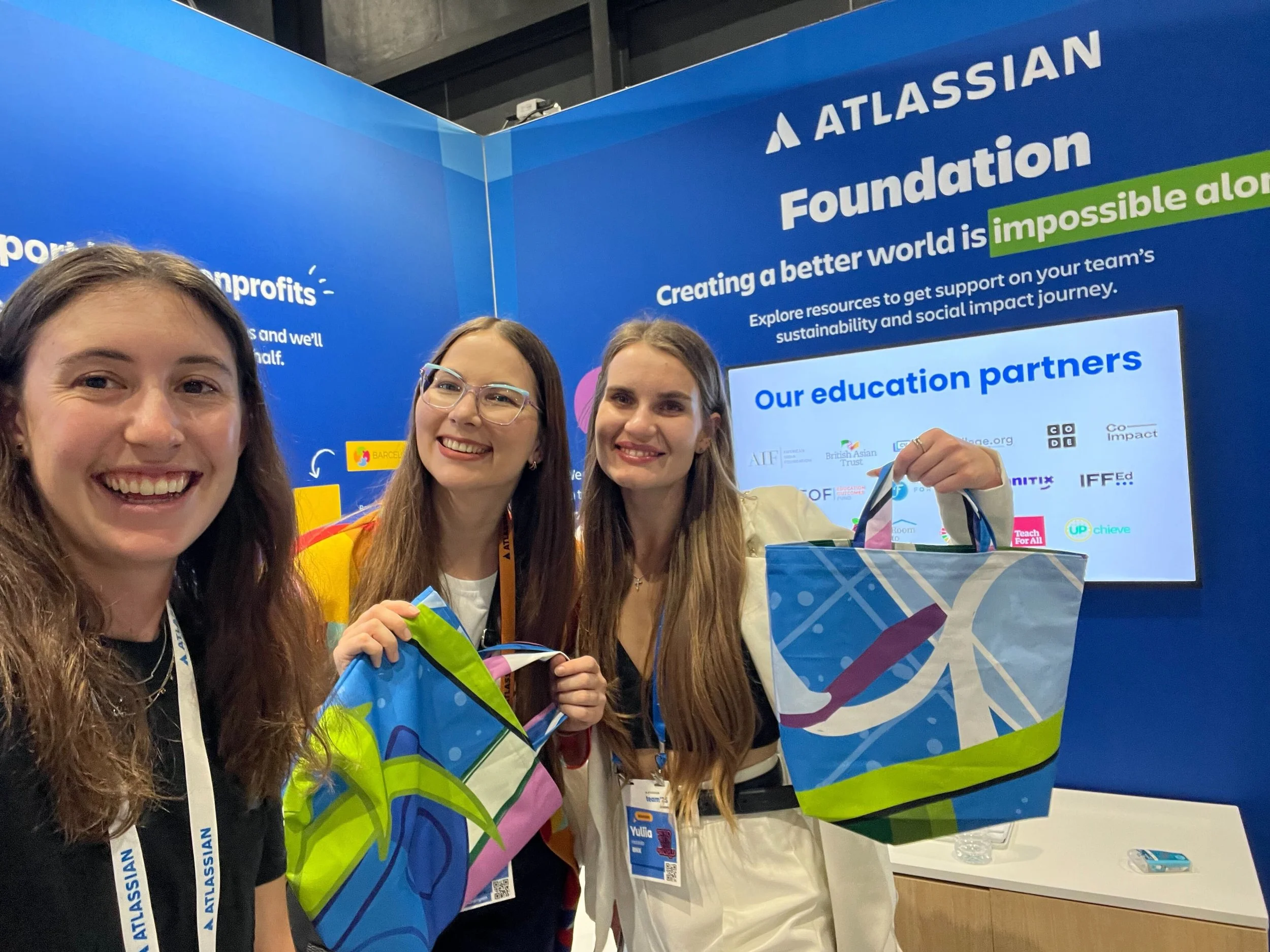
The result was ten handmade tote bags that Emma Schnee brought to Team '25 Europe in Barcelona. As part of Atlassian Foundation’s program, we offered the bags to attendees in exchange for charitable donations. All ten were claimed on the first day of the event.
That was the proof of concept I needed. Not a slide deck. Not a hypothetical. Ten physical bags, gone in hours, with attendees asking where they could get more.
From prototype to production
Armed with real results, I built a formal pitch and partnered with fellow designer Allie Primley , my primary collaborator throughout this journey. Together we assembled a proposal with three vetted vendors, quotes, and a production plan.
We shared the proposal with leadership, and in January 2026, we received budget approval. Not just for the 250 bags we'd proposed, but for 710 bags, utilizing every square inch of salvaged fabric we had stockpiled.
We selected RAREFORM as our production partner, a company that specializes in repurposing materials into functional goods. Their nationwide logistics network meant we could reduce the carbon footprint of the project even further without additional cross-country shipping of materials.
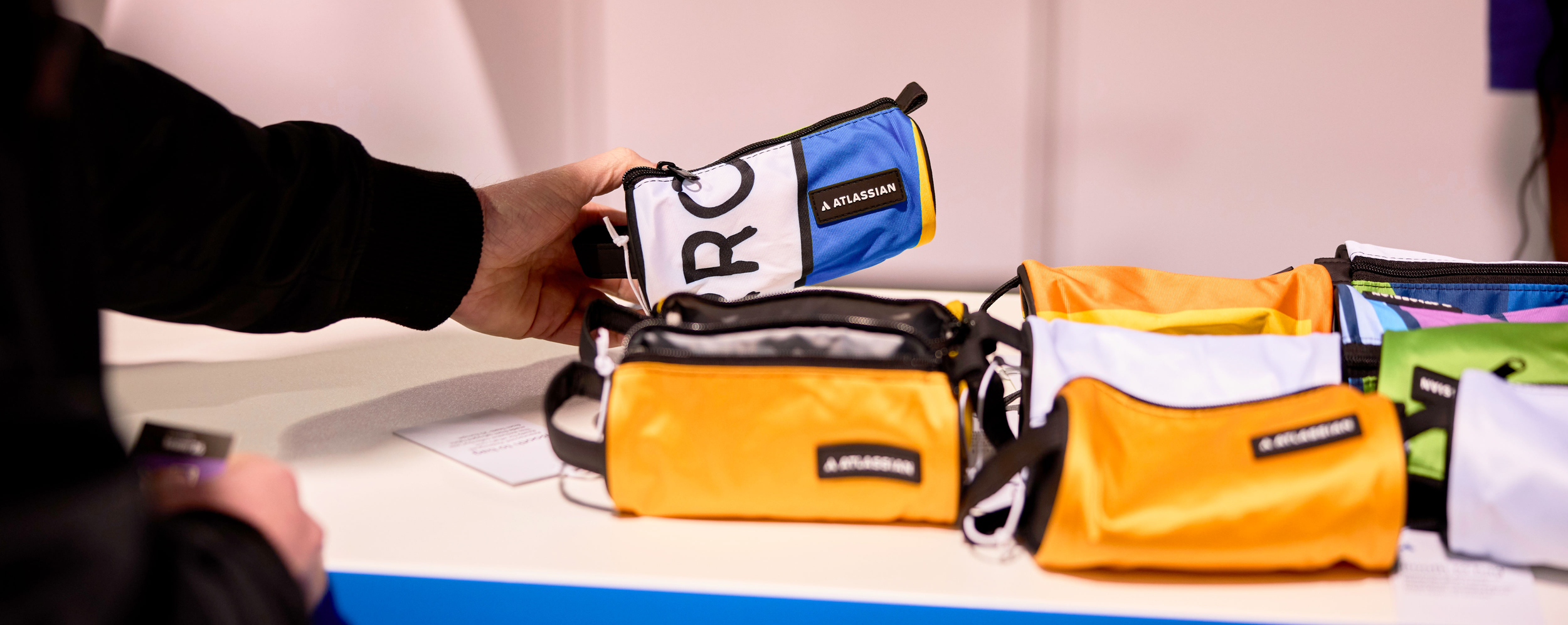
8,712 sq in of salvaged booth fabric allowed us to debut 710 bags at Atlassian's Team '26 in Anaheim as the grand prize for the event’s scavenger hunt, with 35% of conference attendees earning a bag through participation. What I’m most proud of is that we also left the event salvaging 95,640 sq in of fabric for future projects (over 10x the previous year) proving we've developed a scalable system, not a one-off stunt.
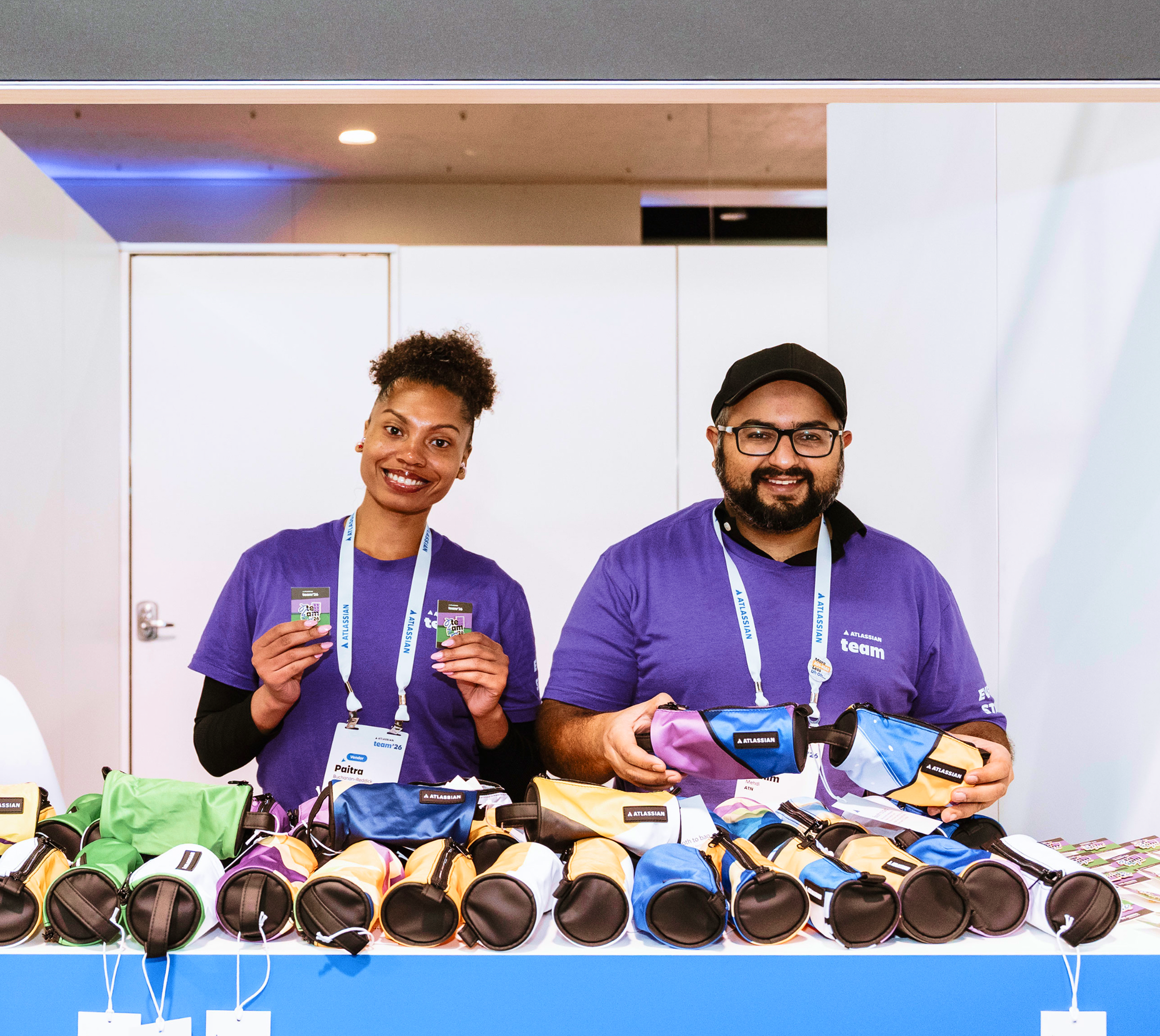
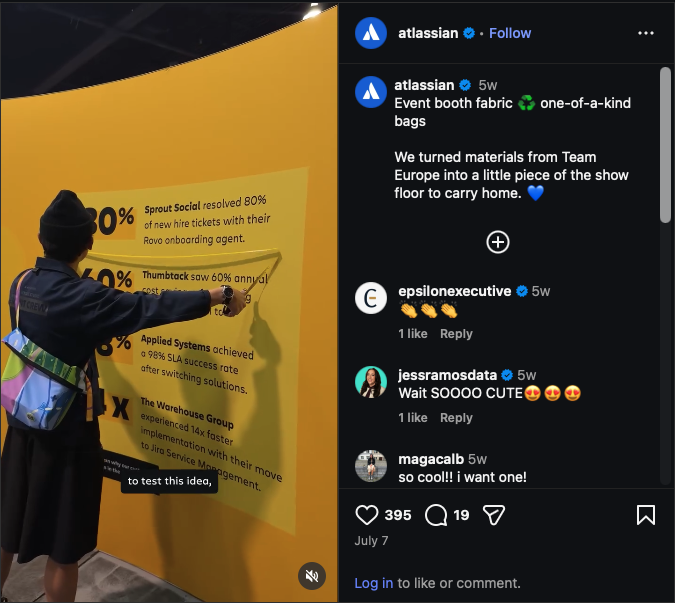
Project Boomerang was featured across Atlassian’s social presence, this is an Instagram post that followed Team ‘26.
What’s next
We're now exploring producing different bag styles for different audiences: conference attendees, community champions, internal staff members. We're looking at extending the program to regional events, carrying a piece of the flagship experience to smaller activations around the world.